
Ever wonder if past prices hold clues for what comes next? Technical analysis lets traders treat old charts like simple hints for future trends. It’s like putting together a picture, each price move adds a little detail to the overall story. When you study these daily changes, you can see market trends and shifts more clearly. Think of it as reading a story where every line hints at the next big move. This approach offers a clear, data-driven way to understand even the most unpredictable market moods.
Core Fundamentals of Technical Analysis in Financial Markets

Technical analysis looks at past price moves on charts and uses simple math to help us predict where prices might head next. It works on the idea that markets often repeat their behaviors, giving clear clues from how much prices change over time. Essentially, every chart tells its own story, showing trends, patterns, and shifts in momentum to help traders guess what’s coming next. And when market moods and emotions add complexity, this approach makes things a bit easier to understand.
One handy tool in technical analysis is visual trend mapping. By watching how prices move over time, traders can quickly spot changes or reversals. For instance, a candlestick chart can show a clear shift in market sentiment, a long lower shadow might hint that buyers are starting to step in. Other techniques, like using moving averages or drawing simple trend lines, help smooth out the data and point to the overall market direction. These methods give us a straightforward view and easy-to-follow evidence that backs up deeper analysis.
Understanding these basics lets traders blend clear chart patterns with solid data on price swings. When you apply technical analysis, market movements become less mysterious and more accessible. This way, traders can watch, measure, and react to the market’s pulse in a simpler, more confident manner.
Technical Analysis Tools and Indicator Methods in Financial Markets
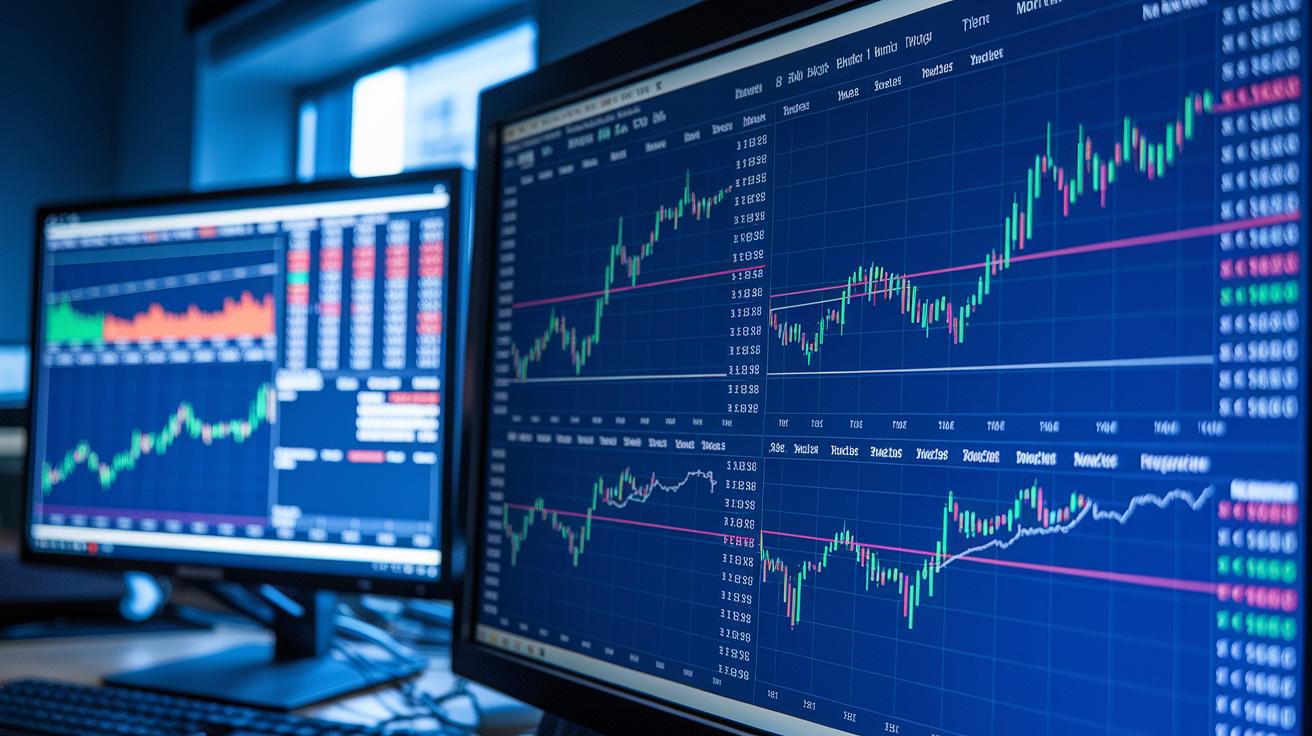
Technical indicators and chart tools are the heart of market analysis. Traders use them to spot key areas where prices might change, like support zones and resistance barriers. You can think of these tools as using historical price pictures to bring clarity to numbers. For example, if a price breaks past a resistance level, it may be a sign that things are about to get bullish. In simple terms, they turn complex data into clear, visual cues.
Many traders lean on indicators such as MACD and stochastic methods to gauge whether the market is gaining strength or losing it. They often use relative strength, which compares a stock’s performance to others, to see if trends are shifting from bullish to bearish. And then there’s the Fibonacci levels that mark spots where prices might take a breather or flip. Together, these practical tools boost confidence when reading chart patterns.
Each indicator serves its own role in forecasting trends. The MACD tracks moving averages to hint at potential reversals. Bollinger Bands help reveal volatility by showing where current prices sit around a moving average. The stochastic indicator sheds light on when a market might be overbought or oversold, guiding timely moves. Combined with Fibonacci levels, these markers offer checkpoints that assist in making smart market timing calls.
| Indicator | Key Functionality |
|---|---|
| Support/Resistance | Shows areas where prices may reverse |
| Relative Strength | Compares performance against peers |
| MACD | Signals trend changes and momentum shifts |
| Stochastic | Highlights overbought or oversold conditions |
| Fibonacci Levels | Points out potential retracement zones |
| Bollinger Bands | Tracks volatility around moving averages |
All in all, these tools work together to create a dynamic picture of market conditions. They turn raw numbers into simple signals, helping traders quickly decide if a trend will carry on or change direction. This blend of techniques bridges the gap between data and actionable market insights.
Advanced Technical Analysis Patterns and Chart Forecasting in Financial Markets

Today, savvy traders use advanced pattern analysis to really understand market behavior. For example, frameworks like the Elliott wave and other forecast methods give clear hints about why prices move the way they do. Traders rely on these tools to strip away the clutter in complex charts, pinpointing trends with a clear, visual touch. By focusing on pure price action, they notice tiny shifts that might signal a new trend starting or a reversal on the horizon. This method goes deeper than basic chart reading and truly sets them apart from the crowd.
Other neat techniques involve blending momentum indicators with volume signals, which helps in sensing upcoming market shifts. Models that spot breakouts show exactly when prices cross important boundaries, while signals that detect reversals alert traders when trends seem ready to change direction. With these tools, investors can gauge how strong a move really is and tweak their strategy in real time. It’s all about mixing smart technical ideas with practical, everyday trading.
These clever methods do more than sharpen market predictions, they empower traders with a proactive outlook. When you mix detailed pattern studies with solid quantitative checks, you paint a more dynamic picture of where the market is headed. In short, turning raw data into actionable insights means that whether you’re catching a subtle price change or confirming a big trend flip, you can act with confidence as things shift. This smart approach drives strategic decisions and paves the way for trading success.
Supplementary Techniques and Risk Management in Technical Analysis for Financial Markets

Traders often add extra techniques to their usual chart analysis to see the market more clearly. They use methods like gap jump methods and trend inflection indicators to pick up quick price moves that hint at changes ahead. By watching divergence cues and checking oscillator efficiency (a measure of how smoothly market energy is shifting), traders spot subtle momentum changes even before a clear trend forms. These extra tools make technical analysis more flexible and give a detailed look at where prices could go next.
Each of these methods helps in managing risk and timing market moves. For example, when a gap jump pops up unexpectedly, it can be a signal to check for potential risks or opportunities. Trend inflection indicators and divergence cues hint at possible turnaround points on a chart, giving you a chance to adjust your strategy. Oscillator efficiency metrics act as a backup, showing shifts in market energy to confirm other signals. Plus, combining enveloping moving averages with an analysis of supply and demand imbalances adds extra support for timing your trades.
Mixing in techniques like channel structure review and pivot design into your standard analysis offers a more rounded approach. These methods help you catch hidden market pressures and fine-tune your entry and exit points. In short, using these extra tools builds a stronger framework that supports smart risk management and improves your overall trade outcomes in changing markets.
Integrative Strategies and Quantitative Modeling in Technical Analysis for Financial Markets

Traders mix traditional chart reading with number-driven methods to build smarter strategies. They take market hints from charts and pair them with clear calculations to see where prices might turn. By checking the data carefully and matching past trends with predictions, they get a better feel for risks and rewards.
Quantitative Modeling Overview
Traders use simple math to spot patterns in past prices and repeating cycles in the market. Think of it like following a recipe: they blend what once happened with what’s happening now to predict future moves. This approach helps them decide when the potential reward outweighs the risk.
Algorithmic and Digital Tools in Technical Analysis
Today’s traders test their ideas with smart computer models before risking real money. Digital chart tools turn raw numbers into easy-to-read graphs, making trends much clearer. This setup allows quick tweaks to strategies, just like adjusting ingredients while cooking, to ensure trades are timed right.
Powered by solid data, combining these techniques helps traders move away from gut feelings and lean on clear visual signals. By turning complex numbers into obvious trends, this method builds a bridge from theory to practice, guiding confident, well-informed trading decisions.
Final Words
In the action, we covered the basics and advanced moves that shape your approach to technical analysis of the financial market. We explored simple chart methods, indicator checks, and smart risk controls. Each part of the article offers clear guidance and relatable examples. It shows how combining straightforward tools with deeper insights can boost your strategy. Embrace these tips and techniques, and keep moving towards smarter financial choices with confidence.
FAQ
Frequently Asked Questions
What is technical analysis in financial markets?
The technical analysis in financial markets means using charts and numerical tools to study price movements and trends, helping traders predict when markets might change direction.
What tools are used in technical analysis?
The technical analysis method uses visual trend mapping, candlestick structures, moving averages, and line trend evaluation to give traders clear insights into market patterns and price moves.
How does identifying support and resistance benefit technical analysis?
The support and resistance approach benefits technical analysis by pinpointing areas where price movements may reverse, guiding traders in setting trade entries, exits, and managing market risk.
What are some advanced techniques used in technical analysis?
The advanced techniques in technical analysis include using the Elliott wave framework, formation forecast methods, momentum indicators, and breakout models to spot possible trend reversals and continuations.
How do supplementary techniques improve risk management in technical analysis?
The supplementary techniques, such as gap jump methods and oscillator efficiency measures, improve risk management by refining trade timing and helping traders manage potential price surprises in the market.
What integrative strategies enhance modern technical analysis?
The integrative strategies in modern technical analysis blend quantitative modeling, algorithmic tools, backtesting frameworks, and digital charting utilities to develop reliable forecasts and balanced risk-to-reward evaluations.