
Ever wondered if you could time your investments like a pro? Market cycle analysis looks at the repeated ups and downs of the market and gives you clues on when to act.
Imagine the market as a roller coaster with quiet moments before a sudden lift or a dip before a sharp drop. By watching these patterns, you can spot smart windows for investing and better manage risk when things feel unpredictable.
This article shows how understanding these cycles can change your approach to investing and help you make more savvy choices.
Market Cycle Analysis Fuels Savvy Investment Timing
Market cycle analysis is like watching the rhythm of the market over time. It helps us see the familiar ups and downs that repeat, so we can better guess when things might change. By looking at past trends and using tools like Fourier series (a way to break down complex cycles into simple waves), analysts turn those patterns into smart moves you can use.
Think of the market like a roller coaster with different parts. First comes the accumulation phase, when prices settle after a drop, kind of like a calm before the storm. Then, during the markup phase, optimism kicks in and prices climb. Next is the distribution phase, where those early investors begin to cash in. Finally, the markdown phase brings more selling and price falls. These steps create a handy guide that tells us when to jump in or step back.
This method really changes how we decide when to invest. Tools like the MACD (which compares short-term and long-term price trends) and the Stochastic Oscillator (a gauge that sees if current prices are near their recent highs or lows) give us extra hints about market momentum. With this clear picture, investors can shape their plans based on where we are in the cycle. It’s a disciplined way that not only spots profit chances but also helps manage risk when the market gets bumpy.
| Term | Explanation |
|---|---|
| Market cycle analysis | Looking at recurring price patterns to spot turning points. |
| Accumulation Phase | A time when prices stabilize after a drop, hinting at a good entry point. |
| Markup Phase | The period when growing optimism and more buyers push prices up. |
| MACD | An indicator that uses moving averages to find momentum. |
| Stochastic Oscillator | A tool that compares closing prices to recent range to evaluate market direction. |
Historical Market Cycle Analysis: Key Trends and Patterns
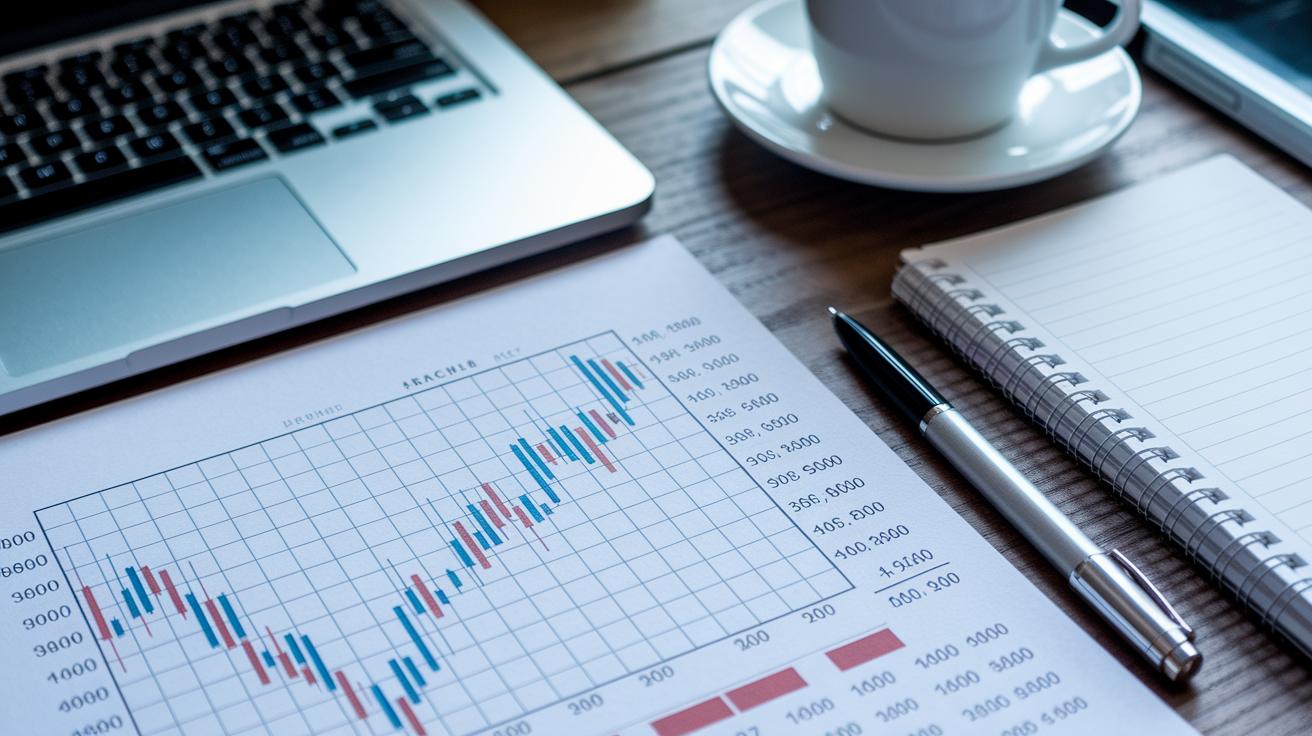
History shows us that market cycles tend to repeat. When you look back at old market charts and records, it’s like reading a story of ups and downs that you can almost feel. Investors see familiar phases, quiet buildup, swift price hikes, cautious trading, and then declines, that help guide smart decisions today.
Take a closer look at some clear examples. The S&P 500 between 2003 and 2007 began with a slow buildup, then raced into a boom as the economy grew stronger. Bitcoin, too, went from about $1,000 to nearly $20,000 between late 2016 and December 2017, moving from uncertainty to a rapid rise. Even gold in the 1970s followed a distinct pattern, influenced by inflation worries and global events. These moments show that different assets can follow a similar rhythm.
Understanding these past trends helps shape better forecasts. Marrying historical data with today’s technical signals lets investors spot when shifts are likely coming. This mix of old and new takes much of the guesswork out of trading and makes it easier to plan moves that align with the market’s natural beat.
| Cycle Event | Phase | Key Factors |
|---|---|---|
| S&P 500 Bull Market | Markup | Economic strength, low interest rates |
| Bitcoin Surge | Markup | Crypto adoption, speculative interest |
| Gold’s 1970s Movement | Accumulation/Distribution | Inflation pressures, geopolitical tension |
Key Indicators and Forecasting Methods in Market Cycle Analysis
Modern tools mix technical signals with smart data analysis to spot the market's subtle beats. Researchers now use computer learning and fractal methods to find patterns that older models might miss. For instance, new forecasting techniques use AI-driven pattern checks with cycle filters to catch shifts in market mood long before traditional tools do.
Other than the usual momentum signs, fresh algorithm systems study many layers of data and add chance-based models into the mix. This new approach looks closely at tiny trends by combining clear statistical signals with real-time computer learning. One adaptive model, when it noticed a small change in historical trends, quickly updated its forecast, showing just how fast these new methods can adjust.
A good analysis today blends old school measures with innovative smart tools. Traders now backtest their models thoroughly and keep refining them over time. They mix hands-on review with automated cycle prediction systems that look at both number crunching and market feel. Key indicators include:
- MACD: Follows shifts in trend strength.
- Stochastic Oscillator: Points to spots where the market might reverse.
- Moving averages: Help smooth out price ups and downs.
- Volume metrics: Measure how busy the market is.
- Volatility measures: Show how fast prices are moving.
Integrating Market Cycle Analysis into Trading Strategies

Traders who get a feel for the market's rhythm can pick the best times to jump in or pull back. They notice if prices are settling after a drop, on the up, peaking, or falling again. Experts like Oliver Kell and Stan Weinstein believe that when you know which stage the market is in, you reduce the guessing game and act with more confidence.
Mixing technical indicators with an understanding of market cycles builds a sturdier trading plan. Think of using tools like the MACD and Stochastic Oscillator, each shows different aspects of price movement, along with cycle data. This blend helps you line up historical patterns with today’s signals, so you’re planning ahead rather than just reacting.
A good plan also means keeping risk in check. Cycle-based risk management sets rules that match the market's natural ups and downs. It’s all about adjusting your approach when things change.
Here’s how to add cycle analysis to your trading strategy:
- Look at the current market phase so you know what’s happening.
- Use technical indicators that show shifts in momentum and trends.
- Set clear risk limits that take each cycle’s volatility into account.
- Keep an eye on market signals and update your strategy as the cycle changes.
Practical Case Studies in Market Cycle Analysis Application
Case studies show us that cycle analysis really works when we mix past events with new insights. Today’s methods use tech tools and real interviews with market experts to take a fresh look at old cycles. One expert even mentioned that during a strong bull run, he adjusted his trading stops to ease early jitters, paving the way for smarter risk control.
We see these ideas in many markets. In a stock market bull run, investors built up their positions slowly and tweaked stop-loss orders as the market moved from gathering momentum to a more active phase. With Bitcoin, traders made quick exits and then jumped back in when prices spiked. And for gold, investors shifted from just holding on to using tech tools to time their exits during downturns.
So, what’s the key lesson? Blending past market wisdom with today’s investor moves creates strategies you can actually use. Noticing changes in trading rules and risk management from one market phase to another gives investors the edge needed to adjust their approaches in real time.
| Case Study | Market Asset | Outcome/Strategy |
|---|---|---|
| Stock Market Bull Run | Stocks | Dynamic entry scaling and revised stop-loss settings |
| Bitcoin Surge | Cryptocurrency | Quick exits paired with timely re-entry for volatility mitigation |
| Gold Commodity Cycle | Commodity | Shift from passive holding to active hedging using tech-enhanced signals |
Final Words
In the action, we explored the basics of market cycle analysis, looked at historical examples, and uncovered how technical signals guide smart trading moves. We broke down the cycles, studied key market phases, and showed how to use indicators for better investment timing.
Key takeaways include:
• Recognizing recurring market patterns
• Using MACD and Stochastic Oscillator signals
• Applying quantitative models
• Integrating cycle trends into trading strategies
• Learning from real-world case studies
Positive prospects lie ahead with thoughtful cycle analysis.
FAQ
Q: What are the 4 phases of the market cycle?
A: The four market phases are accumulation, markup, distribution, and markdown. These stages help investors understand market moods and decide when to buy, hold, or sell.
Q: What is stock market cycle analysis?
A: Stock market cycle analysis examines repeating market trends to pinpoint turning points. This process helps investors make better trading decisions by using historical patterns and technical data.
Q: What is a market cycle analysis PDF?
A: A market cycle analysis PDF is a detailed document that explains recurring market patterns, with charts and case studies to guide investors on applying cycle analysis to their strategies.
Q: What is a stock market cycle chart?
A: A stock market cycle chart visually represents the different market phases, helping traders track trends and spot reversals to strategically time their market entries and exits.
Q: How long is a market cycle?
A: Market cycle durations vary by economic conditions and asset classes. Some cycles last a few months, while others extend over several years, affecting how investors plan their strategies.
Q: What is the 4-year market cycle theory?
A: The 4-year market cycle theory proposes that significant shifts occur roughly every four years, often linked to wider economic and political changes, which can help forecast market movements.
Q: How do you determine a market cycle?
A: Determining a market cycle involves analyzing technical indicators like MACD and the Stochastic Oscillator along with historical trends to identify shifts in market phases.
Q: What is the market cycle in technical analysis?
A: In technical analysis, the market cycle refers to the recurring phases of price movements, providing traders with insights to better time entries and exits when market conditions change.
Q: What is the trading cycle in the stock market?
A: The trading cycle in the stock market is the repeated sequence of market phases that traders observe to optimize timing for entering and exiting positions based on market behavior.