
Have you ever thought market moves might hide secret clues? Technical analysis looks at price shifts and trading volume as hints to what might happen next. It’s a bit like following a simple map where every bend could signal a new opportunity. By noticing trends and watching where prices change course, you can choose the best moments to enter or exit a trade, using handy tools like ATR and RSI. In short, these charts turn into little guides that can help shape your next smart move in trading.
Core Principles of Technical Analysis for Trading
Technical analysis is like reading a story told by price action and trading volume. By looking at past price moves, traders can catch a hint of where the market might go next. Imagine it as reading a map, you see trends and key turning points just like plotting your favorite route.
First, figure out the trend. Is the market rising, falling, or just moving sideways? Knowing the trend is the first step before you dive deeper. Then, sketch out support and resistance areas, which are like invisible barriers where prices often bounce or pause, much like a runner feeling the edges of a track.
Next, set clear entry and exit points. Use tools like the Average True Range (ATR) and the Relative Strength Index (RSI) to help decide the right moment to act. For example, if you spot a strong signal, like a sharp pin bar forming at a support level, it might be time to take action.
Here’s a simple checklist to keep in mind:
- Identify the trend direction (up, down, or sideways).
- Mark the support and resistance zones.
- Set your entry and exit points using tools like ATR and RSI.
Underpinning all of this are three key ideas: the market price shows all factors, prices naturally move in trends, and patterns repeat because of trader emotion.
Key Technical Indicators for Trading Analysis

Technical indicators are like the trusted tools in your trading kit. They help you understand how the market is feeling and spot trends. Take the Average True Range (ATR), for example. It shows how wild the price swings are, making it a handy guide when you're setting stop-loss orders. I often say, "I always check the ATR before setting my stop loss" to make sure my risk stays under control.
The Relative Strength Index, or RSI, is another favorite. It gives you a simple clue on whether an asset might be overbought or oversold. When the RSI is at extreme levels, it might be hinting that the market could turn soon. Pretty neat, right?
Then there’s the world of moving averages such as the Simple Moving Average (SMA) and the Exponential Moving Average (EMA). They smooth out the jittery price changes so you can see the big picture, a steady trend emerging from all the noise.
The Moving Average Convergence Divergence, or MACD, mixes two moving averages with a histogram. Imagine it as a friendly traffic light at a busy intersection, signaling when it’s a good time to move forward or slow down. And to give even more confidence, volume analysis checks the number of trades. It backs up price moves so you know a trend isn’t just a fluke.
A few easy-to-remember points:
| Key Idea | What It Means |
|---|---|
| Market Price | Shows the combined impact of all market factors |
| Trends | Prices tend to move in familiar patterns |
| Price Patterns | Recurring shapes that reflect trader behavior |
Chart Patterns and Candlestick Signals in Technical Analysis
Chart patterns are like snapshots on a price chart that help traders guess when a market might turn around or continue on its path. Think of shapes like head & shoulders, double tops or bottoms, triangles, flags, and wedges. For example, a head & shoulders pattern shows three peaks, where the middle one is the highest, hinting that prices might soon flip direction.
Candlestick signals work closely with these patterns to give extra clues. Candlesticks, like the hammer, inverted hammer, bullish or bearish engulfing, or a pin bar, add layers of detail. A hammer might mean that after a steep drop, buyers have started to jump in. It’s a bit like spotting a clear warning sign that says, "Hold on, change is coming."
Context is key too. When these patterns show up right at important support or resistance levels, their message is even stronger. For instance, a bullish engulfing candle at a solid support level can really boost a trader’s confidence that a new uptrend is on the horizon.
Traders usually start by scanning for these familiar shapes, then back up their observations with candlestick signals. This combo helps filter out the everyday noise and zoom in on moves that really look promising.
Each of these visual cues forms a language of its own, one that traders learn to understand over time. A clear chart pattern matched with a strong candlestick signal not only hints at the next market move but also helps gauge how risky a trade might be.
A few quick points to remember:
- Head & shoulders: Suggests a possible reversal.
- Double tops/bottoms: Signal some lingering hesitation.
- Triangle patterns: Hint at consolidation before a breakout.
Support and Resistance Techniques for Trading Analysis
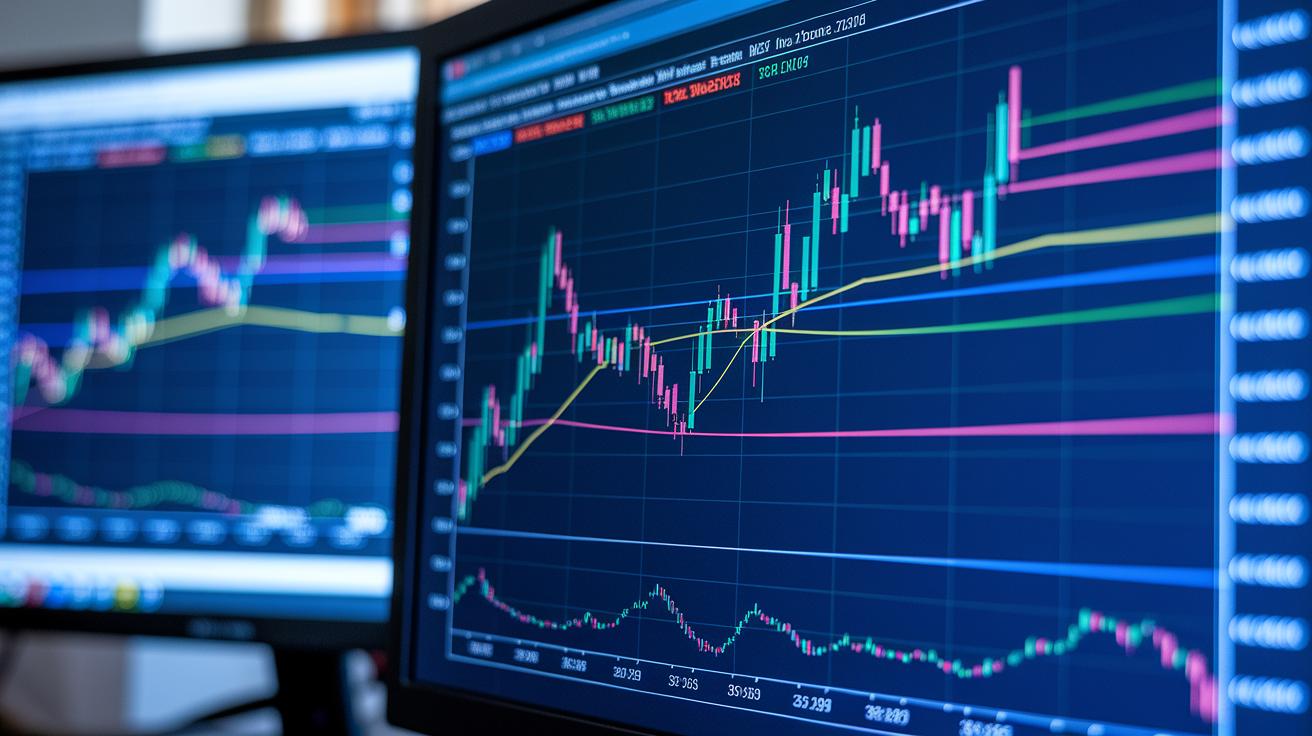
Support and resistance zones are like the road signs for trading, they tell you where prices might pause or reverse. Picture Gold (XAU/USD) on June 20, 2025: the market was quietly settling between a demand zone at $3,180 and a supply zone at $3,500. If prices push past $3,500, traders might look to hit a target of about $3,788, while a drift back to $3,180 can offer a neat buying opportunity. It’s smart to set a stop loss below $3,150 to help keep any losses small. Many traders also use pivot point formulas to work out daily, weekly, and monthly support and resistance levels, which can make spotting entry points that much easier.
| Level Type | Calculation Method | Primary Use |
|---|---|---|
| Daily Pivot | (High + Low + Close) divided by 3 | Great for intraday trading |
| Weekly Pivot | Average of the week’s high, low, and close | Helps spot key trends over five days |
| Monthly Pivot | Monthly average of high, low, and close | Perfect for looking at longer trends |
Setting these levels is like drawing a map for your trade. You start by calculating the pivot, then mark out where support and resistance might lie. A strong move through one of these areas, especially with heavy volume, signals that a bullish shift could be underway. On the flip side, if the price bounces off the $3,500 mark, it might mean the market will keep trading in its established range. Knowing these demand and supply zones lets you make confident, timely decisions when managing your trades.
Risk Management and Psychology in Technical Analysis
Trading isn’t only about finding those signals; it’s also about safeguarding your money and keeping a clear head. One smart approach is to size your positions using the Average True Range (ATR), which shows you how much a price typically moves. For instance, if you’re looking at gold, you might set a stop loss below $3,150 to keep potential losses small. This method lets you control your risk and adjust smoothly when the market takes an unexpected turn.
Emotional discipline matters a lot too. It’s easy to want to get out of a trade too soon or jump into another after a loss. Instead, take your time and wait for those clear, confirmed signals. Think of it like waiting for a green light before you drive, it stops you from making hasty choices.
Remember these simple tips:
- Use ATR-based position sizing to match your risk with market swings.
- Set a clear stop loss, such as below $3,150 when trading gold.
- Stay patient and keep your emotions in check until the market sends a clear signal.
These steps help build a steady and disciplined trading mindset.
Automated Tools and Advanced Methods in Technical Analysis

Advanced trading now uses handy automated tools to help you spot technical setups fast and accurately. For example, platforms like MetaTrader 4 come with custom scripts that automatically scan charts for the patterns you choose. This means you can catch signals as soon as they show up on charts set to daily, 4-hour, or 1-hour views. Mobile chart apps also play a key role by offering live feeds, customizable dashboards, and alerts that keep you updated on the go. Imagine if a program could tell you right when a moving average crossover happens, no need to stare at your screen all day.
Algorithmic Chart Scanning Tools
Most modern trading platforms now include tools that check many charts at once based on your set rules, such as specific candlestick signals or moving averages. These tools alert you when the right setup appears, taking the guesswork out of the process. It’s like having a little market assistant that watches every small shift so you can focus on fine-tuning your strategy.
Backtesting and Simulation Software
Backtesting tools let you replay past price data to see how your trading strategy might have worked before. This lets you review win rates and drawdowns and adjust your approach before investing real money. Similarly, simulation software helps you optimize your indicators for current market trends. In short, these methods help you build a solid, well-tested trading plan that boosts your confidence while managing risk.
Final Words
In the action, we broke down the basics of technical analysis. We discussed the key indicators, analyzed chart patterns, and outlined solid support and resistance levels. We also highlighted how risk management and advanced tools add strength to your strategy.
Each section builds on the last, offering clear, real-world steps to create a balanced approach. It’s all about blending careful evaluation with smart moves. Keep this guide in mind as you shape your strategy using technical analysis for trading.
FAQ
Q: What does technical analysis for trading PDF cover?
A: The technical analysis PDF explains core trading ideas like chart patterns, support/resistance, and indicators to help forecast market trends using clear examples and step-by-step methods.
Q: How can I access free technical analysis for trading?
A: The free technical analysis resources provide online guides and downloadable PDFs that break down chart patterns, key indicators, and risk management techniques for traders at any level.
Q: What is a technical analysis example?
A: The technical analysis example shows how to spot trends, draw support and resistance, and use indicators such as RSI and ATR to predict price movements in a given trading scenario.
Q: What does a Forex trading technical analysis PDF include?
A: The Forex trading technical analysis PDF focuses on currency markets, detailing charts, specific forex indicator applications, and examples aimed at understanding price action in currency pairs.
Q: What technical analysis tools are commonly used?
A: The technical analysis tools include indicators like moving averages, RSI, ATR, and chart pattern recognition software, all designed to help traders identify trends and market momentum effectively.
Q: What information is found in a technical analysis chart patterns PDF?
A: The technical analysis chart patterns PDF features visual examples of patterns like head and shoulders, triangles, and double tops, which traders use to spot potential market reversals.
Q: What methods are involved in technical analysis?
A: The technical analysis methods involve studying price trends, using support and resistance levels, applying indicators such as ATR and RSI, and analyzing historical price patterns to forecast future movements.
Q: How do you perform technical analysis in trading?
A: The process of technical analysis in trading includes examining chart trends, applying indicators, and marking support/resistance areas to project future price directions and manage risk.
Q: What is the 7% rule in stocks?
A: The 7% rule in stocks is a guideline suggesting that traders risk around 7% of their position value per trade, aiming to limit losses and safeguard their trading capital.
Q: Which technical analysis approach works best for trading?
A: The best technical analysis approach varies by trading style but often combines trend analysis with indicators like RSI, moving averages, and volume studies to confirm market moves.
Q: What are the four basics of technical analysis?
A: The four basics of technical analysis include identifying trends, mapping support and resistance levels, recognizing chart patterns, and using momentum indicators to signal market shifts.