
Ever wonder how a simple economic update can send currencies into a spin? Forex fundamental analysis looks at things like interest rates (the cost of borrowing money), GDP changes (a country's economic output), and job reports (how many people are working) to explain why prices shift.
It’s like getting a sneak peek at what might happen next on the trading floor. By mixing up-to-date news with clear, solid data, you can catch trends that might lead to smart, profitable moves. In this guide, we break down the key economic signals so you can make smarter trading decisions in real time.
Core Principles of Forex Fundamental Analysis
Forex fundamental analysis means looking closely at economic, social, and political factors that move currency prices. It examines the basics of supply and demand while using tools like live comments, pivot-point calculators, currency heat maps, and volatility charts to offer up-to-the-minute insights. For example, if you see a live comment like "Market reacting to unexpected inflation data," it’s a quick hint that economic forces are at play.
This approach goes hand in hand with technical analysis, which sticks to chart patterns and price trends. Instead of only watching prices move, fundamental analysis helps explain why they move. Imagine reading an economic report that shows a change in a country’s GDP growth. It’s like an early signal that a currency’s value might shift. By combining data from official reports with real-time commentary, traders grasp a richer picture of market mood and momentum.
| Key Factor |
|---|
| Central bank policies and interest rates |
| Gross Domestic Product (GDP) growth rates |
| Inflation and Consumer Price Index (CPI) changes |
| Employment statistics and labor market reports |
| Trade balance and current account flows |
| Geopolitical events and political risk |
| Market sentiment and risk appetite |
Mastering these elements gives forex traders a solid foundation to decode market moves. Breaking down complex economic data into simple, actionable insights makes it easier to spot profitable chances while keeping risks in check. By mixing live news feeds with detailed economic reports, traders balance quick reactions with long-term trends to make smarter decisions in the fast-paced world of forex.
Major Economic Indicators in Forex Fundamental Analysis

GDP and Inflation Overview
GDP surprises can send currencies on a wild ride, sparking quick rallies or sudden sell-offs. For example, an unexpected rise in quarterly GDP might push pairs like EUR/USD upward as traders react to a stronger-than-expected economy. Similarly, CPI and PPI numbers act like a thermometer for inflation. If these figures climb faster than planned, it often hints that central banks might change their policies, altering market sentiment in a flash. Imagine Japan’s core CPI jumping unexpectedly. Traders might start selling the yen, expecting a shift in policy.
Employment Metrics
Employment figures are key to understanding economic strength. Nonfarm payrolls and unemployment data offer a clear snapshot of job growth and overall business activity. When reports show strong job creation or a drop in unemployment, the USD often gets a boost as investors see a robust economy ahead. For instance, lower unemployment can spark a surge in demand for the dollar. Plus, participation rates add even more clarity by showing just how many people are in the workforce.
Trade Balance and PMI Brief
The trade balance, which is the difference between a country’s exports and imports, plays a big role in shaping currency values. A growing trade deficit can weaken a currency, while a surplus might strengthen it. Meanwhile, the Purchasing Managers' Index, or PMI, provides early clues about trends in both manufacturing and service sectors. Think of it this way: an upward revision in the PMI can hint at expanding business activity, which usually supports the currency. Together, these indicators give traders a well-rounded view of the economy and help them forecast when a currency might make a big move.
| Indicator | Release Frequency | Impact on Currency |
|---|---|---|
| GDP | Quarterly | Drives broad market rallies or sell-offs |
| CPI/PPI | Monthly | Can spark central bank action |
| NFP/Unemployment | Monthly | Boosts USD strength through job market trends |
| Trade Balance | Monthly | Shows pressure on currency based on export-import differences |
| PMI | Monthly | Signals overall economic momentum and sector health |
Central Bank Policy Effects in Forex Fundamental Analysis
Interest Rate Decisions
Big central banks like the Fed, the European Central Bank, and the Bank of Japan have a huge impact on currency values when they set interest rates. When the Fed makes a change, even a small nudge from Governor Waller hinting at a softer stance, it can shift yield differences and send ripples through the U.S. dollar. For the euro, traders keep an eye on clues from upcoming ECB meetings, and shifts at the Bank of Japan play right into how attractive the yen is. Many traders even use simple tools like pivot calculators to catch these changes as they happen. When central banks hint at raising or lowering rates, market players quickly adjust their strategies, balancing risk and reward based on these new cues.
Forward Guidance and Communication
How central banks talk about the future matters just as much as what they do. Whether it’s a policy statement, a press conference, or detailed meeting notes, every word can offer a peek at what’s next in monetary policy. Traders listen carefully, because even small hints in these messages can spark big moves in currency prices. A gentle, well-chosen phrase might signal a slow, steady approach, while sharper language could prompt quick shifts in major pairs like the dollar, euro, and yen. By comparing current hints with past trends, traders blend these forward signals with actual rate decisions. In short, regular insights from central banks help investors see the bigger picture, allowing them to adjust their positions as the market evolves.
Integrating Geopolitical Events and News Releases in Forex Fundamental Analysis
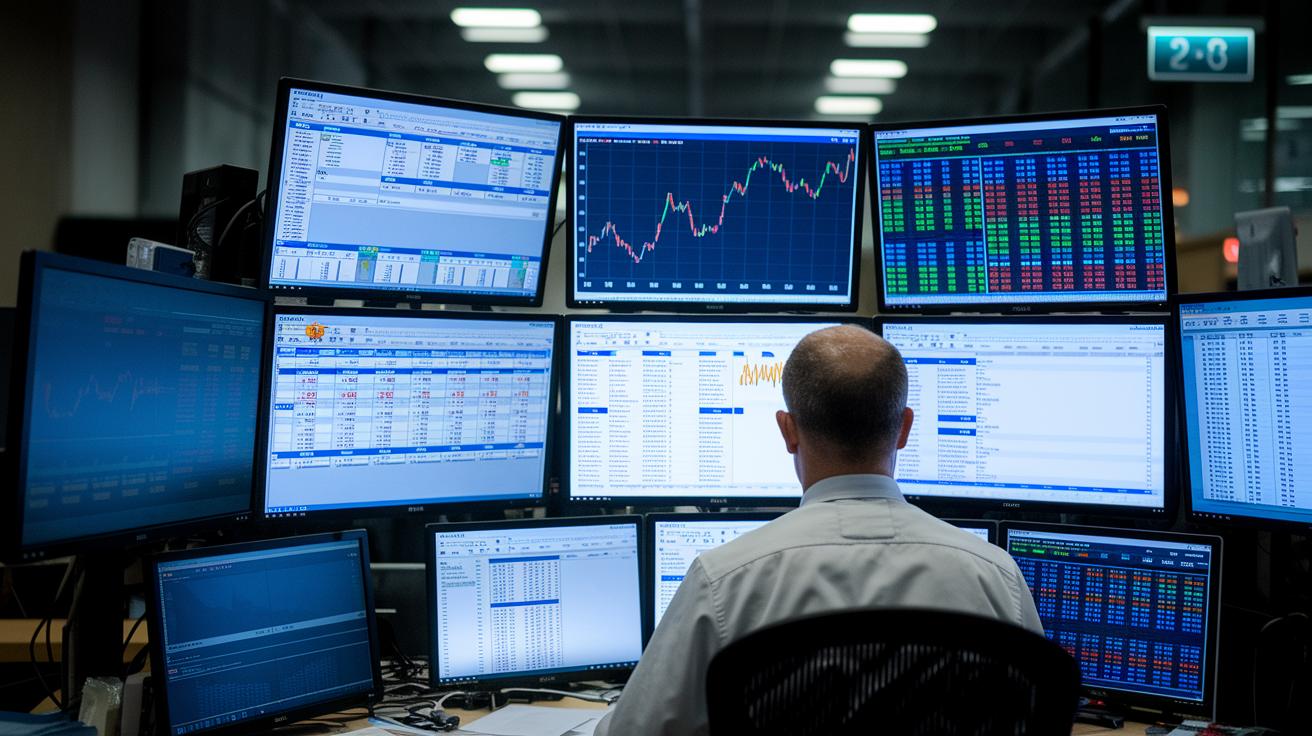
Keeping an eye on real-time news feeds is key to feeling the heartbeat of global markets. Traders watch breaking news and political updates very closely, always ready to tweak their positions when the mood shifts from risk-on to risk-off.
For example, if the news points to rising political tension, it’s a signal to steer away from unstable currencies and lean toward safe assets that bring steadiness during uncertain times. Sometimes, you might even see a live update like "Unexpected diplomatic friction raises market caution." This kind of headline pushes traders to quickly recheck how money is flowing between currencies.
Think about times when uncertainty in U.S. politics led to quick drops in the dollar as investors rearranged their portfolios. Or consider a sudden conflict in the Middle East that made oil-linked currencies and safe havens suddenly more appealing. In each case, fast reactions to news can spark big and sometimes sudden moves in the major currency pairs. This proves that adding geopolitical risk into your fundamental analysis is essential for making smart trading decisions.
Using an Economic Calendar for Forex Fundamental Analysis
Begin by setting your filters to highlight events that can really move the market. You can find data like PMI weeks, central bank meetings, or key indicators such as US CPI/PPI and Canadian business sentiment on trading platforms. For instance, you might flag an ECB meeting or a pivot-point reading scheduled at "Sat, Jul 19, 2025 @ 03:45 GMT" so you stay tuned to moments that matter. This way, you cut through the clutter and focus on important shifts in market sentiment.
Next, keep an eye on the actual versus forecast numbers as each announcement comes in. When you see a headline like "US Retail Sales jump 1.2% against a forecast of 0.8%", it’s a signal to double-check the economic calendar and note the difference for later analysis. By comparing reported figures with what everyone expected, you get a glimpse of how traders adjust their outlook and prepare for market moves.
Then, plan your trading moves around these events. Use the economic calendar to set clear windows for making quick decisions or waiting until the market calms down. For example, you might decide to jump in right after a major rate decision or hold off until the sudden volatility fades. This sort of planning helps you manage risks and take advantage of predictable changes that follow big data releases.
forex fundamental analysis sparks profitable currency moves

Traders mix common market sentiment with real-world economic checks to spot great currency moves. They rely on tools like the CFTC COT reports, live positioning charts, currency heat maps, and top movers lists to get a clear feel for the market mood. These resources act as a quick snapshot, showing if traders lean towards buying or selling, especially when lined up with important economic news.
By combining this lively sentiment with solid fundamental insights, traders can tell when a currency is either overbought or undervalued after a burst of news or data. Short-lived spikes in market mood can be misleading, but checking against deeper economic trends makes the picture clearer and more balanced. This approach helps filter out false signals and boosts confidence in each trade decision.
Overall, blending sentiment with foundational economic data gives traders a more complete understanding of currency trends. It’s like checking both the market’s pulse and its heartbeat, ensuring that every trade is backed by both instinct and evidence.
Case Study: Applying Forex Fundamental Analysis to EUR/USD
In one live trade, better-than-expected US retail sales came alongside mixed US CPI figures, setting up a clear change in the EUR/USD pair. On one hand, strong US spending hinted that the economy was doing well, and on the other, cues from the ECB calendar hinted that rate decisions might be on the way. This mix of signals created a good opening, one where the differences between US data and European bank hints could be used to make a smart trade.
The trade was built on a simple checklist. First, key economic numbers, like US retail sales and CPI reports, were checked to see how the market felt. Then, the ECB’s schedule was reviewed to spot any upcoming rate moves that could change the market’s direction. After that, live news feeds were kept an eye on to catch any big headlines that might move the EUR/USD pair. Finally, sentiment tools, like currency heat maps and top mover lists, were used to confirm that the trend was really forming. With these steps, every mix of hard data and market mood was considered before jumping in.
In the end, the trade gained over 100 pips in just one week. Risk management tools were used during the choppy moments to safeguard the trade. This story shows that a steady, well-informed approach, mixing thorough data checks with real-time news and market vibes, can lead to good gains and useful insights for future trades.
Final Words
In the action of our discussion, we examined key economic indicators, central bank policy moves, and geopolitical events that spark changes in currency value. We also looked at tools like live charts and economic calendars to bring real-time insights into forex fundamental analysis.
Using these ideas, you can build a clear picture of market trends and refine your investment moves. Embracing these practical insights can boost both financial growth and stability, giving you more confidence when making decisions on the trading floor.
FAQ
Where can I find forex fundamental analysis resources including PDFs, books, websites, courses, apps, and APKs?
The forex fundamental analysis resources refer to varied formats like downloadable PDFs, detailed books, informative websites, structured courses, mobile apps, and APK files, all offering insights into economic reports and macro data.
Does fundamental analysis work for forex?
Fundamental analysis helps traders by using macro data, economic reports, and central bank actions to understand currency trends, though its effectiveness can vary with market conditions.
What is the 5 3 1 rule in forex?
The 5 3 1 rule in forex refers to a guideline that combines structured risk management and timeframes, suggesting a method to help traders plan their entries and exits based on set market criteria.
What is the 90% rule in forex?
The 90% rule in forex indicates that most trades may miss targets, emphasizing the need for solid risk management and realistic profit expectations in trading.
What is the best fundamental indicator for forex?
Many traders favor central bank decisions and economic reports as the best fundamental indicators for forex since they clearly reveal shifts in supply-and-demand dynamics that influence currency values.