
Ever felt that day trading is just a game of chance? It might seem that quick trades only depend on luck, but smart strategies can give you a real edge. Think of them as tools that let you ride the market’s ups and downs with ease. This post breaks down clear techniques, like momentum trades (buying when stocks are on the rise) and breakout signals (noticing when prices break out from their usual range), to help you make the most of fast market shifts while keeping risk low. Whether you’re trading big or just dipping your toes in, these fresh moves show you a new way to win in a fast-paced market.
Actionable Day Trading Strategies for Timing, Market Analysis, and Risk Control
Day trading means catching price moves that happen all within one day. It’s like riding little waves in the market. Traders place orders quickly to take advantage of these shifts while keeping a close eye on risk. Peak times, like when the market opens or closes, are especially busy, giving extra chances for fast trades. By the way, in the U.S., pattern day traders need at least $25,000 in equity to help protect against sharp market swings.
Skilled day traders work with accounts of different sizes. For instance, someone with a $10,000 account might earn about $200 to $300 in a day. That’s roughly a 2% to 3% return on that day, even though you can’t count on making 1% every single session because the market moves quickly. Quick entry moves and well-timed exits are key to keeping trades profitable while following strict risk rules.
Here are some main strategies traders often use:
- Momentum trading
- Breakout trading
- Scalping techniques
- News-based trades
- Technical chart patterns
Each strategy taps into a unique part of the market’s behavior. Some work best during wild, fast moves, like scalping, while others catch longer trends through momentum or breakouts. Mixing these methods lets traders build a system that focuses on fast decisions and tight risk control, setting the stage for disciplined, profit-driven trading.
Technical Chart Analysis and Price Action Models for Day Trading
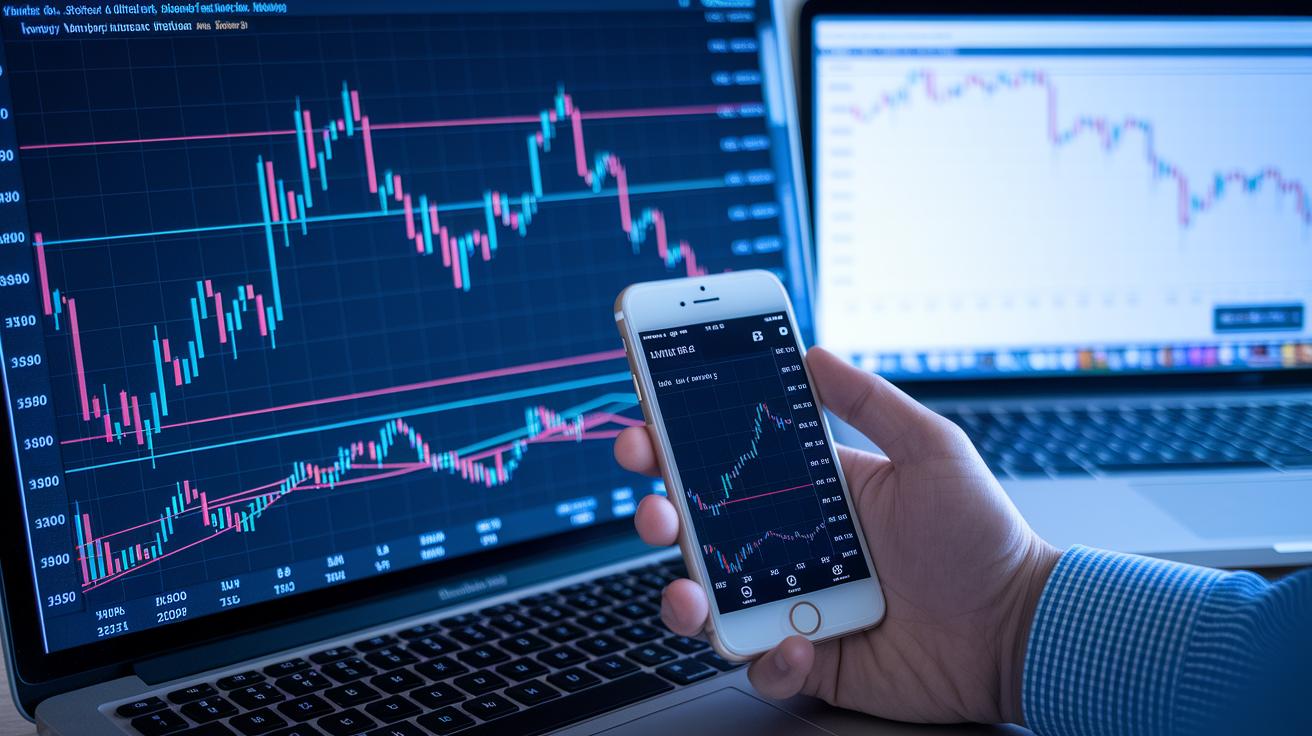
Chart models and price action are key because they let traders easily see how prices move around support and resistance levels. Simple charts and familiar patterns help us catch trends early. For instance, a moving average ribbon paired with a relative strength exit rule offers a quick peek into market momentum.
Patterns like bull flags and flat top breakouts give clear signals for momentum. These straightforward price action models break down tricky market moves into smaller, bite-sized ideas. This way, you can decide when to jump in or step back based on how the price behaves along known lines.
| Pattern | Description | Entry Signal |
|---|---|---|
| Bull Flag | A pause after a strong upward move | Buy when the price breaks above the flag |
| Flat Top Breakout | Price steadies at a high before moving up | Enter on the first candle above the flat top |
| Moving Average Crossover | Short-term and long-term averages cross paths | Buy when the short-term average rises above the long-term |
| Bollinger Band Spike Reversal | Price jumps beyond the band, suggesting a return | Buy on the pullback back into the bands |
Linking these patterns to entry and exit timing is crucial for spotting winning trades. By studying a bull flag or a flat top setup, traders can time their moves to catch fast price shifts while keeping risk in check. The moving average crossover and Bollinger Band signals add extra clues for knowing when to exit or confirm an entry. With a clear idea of volume trends and support lines, even in a fast market you can make a confident call on where the price will go next. This blend of technical analysis and price action models builds a solid framework for making quick and well-informed trade decisions.
Momentum, Scalping, and Breakout Tactics in Day Trading
Momentum trading is all about catching a stock as it gathers speed before it slows down. Traders keep a close eye on stocks making new highs during busy hours, which might hint that the upward push will continue. For instance, the 11 am rule tells us that if a stock sets a new daily high between 11:15 and 11:30 EST, there’s about a 75% chance it’ll finish the day within 1% of that peak. It’s like reading the pulse of the market and turning rapid moves into clear signals for quick decisions.
Scalping, on the other hand, is a fast-paced strategy focused on tiny price moves. Traders often use the moving average ribbon for entry and blend it with RSI-based exit rules. What does that mean? It helps them pinpoint the right moment to hop in and out, so even little shifts can be profitable while protecting against sudden reversals. It’s really all about speed and perfect timing to keep those trades in the green.
Breakout tactics center on spotting key price levels where a stock is primed to break out of its usual range. Here, volume plays a big role. A sharp rise in trading volume can confirm that a support or resistance level has been busted, giving traders the confidence to jump in. With patterns as clear as these and volume cues to back them up, traders can feel a lot more certain about their moves.
Algorithmic, Automated Execution, and Simulation Trading Systems

Algorithmic trading systems help place orders at lightning speed by scanning through complex market data automatically. They work on a set of pre-programmed rules that trigger orders in just milliseconds when certain conditions are met. For example, if a price moves past a set threshold, the system might instantly buy or sell, kind of like a racer shifting gears right when needed. This quick response is crucial when market conditions are fast and unpredictable.
Backtesting is like a practice run using historical data to see how a trading idea would have worked in the past. Traders test their strategies on previous market movements, gaining clear insights into what works and what needs tweaking. This process sheds light on important metrics such as profits and potential dips, building confidence in the strategy over time.
Simulation trading platforms recreate real market conditions with current data, providing a risk-free playground for honing trading techniques. They let traders try out different tactics and learn by doing, without risking real money. In addition, features like free introductory classes, active chat rooms, and detailed trading journals help create a supportive space where traders can fine-tune their skills and keep pace with ever-changing market trends.
Effective Risk and Trade Management Rules for Day Trading
Day trading is all about handling risk smartly. Traders need simple, solid rules to protect their money, especially when the rules demand at least $25,000 in equity. By setting stop orders carefully – usually around 20 cents below an initial pullback – traders try to get a neat 2:1 profit-to-loss ratio. Quick exits when things go south and taking some profits along the way keep the process grounded. This careful, step-by-step approach makes sure every trade fits into a clear risk-reward plan, which is key to steady performance even in busy markets.
Stop Loss Protocols
A good stop loss plan is a must. Many traders start by placing a stop order 20 cents under their first pullback. Then, as part of the trade begins to show a profit, they often move the stop so it breaks even. This small change protects gains and cuts down on extra risk. Imagine it as a built-in safety net during fast market moves. When these stops kick in, the loss stays small and manageable, keeping your trading discipline in check.
Position Sizing Models
It’s just as important to think about position sizing to balance risk and reward. Typically, traders risk only about 1%–2% of their capital on a single trade. This means one loss won’t send your account tumbling. By often taking partial profits and locking in gains, you build a buffer against market ups and downs. It’s like planning a balanced meal – you mix small amounts of risk with solid reward. Keeping an eye on profit-loss ratios and tracking your success stats gives you clear insights on what works and what might need a tweak.
Trading Psychology, Journaling, and Ongoing Strategy Refinement

Emotional control is key to success in day trading. When markets move quickly, staying calm helps you avoid snap decisions driven by strong feelings. Imagine a trader pausing for a moment and thinking, "I feel a surge of excitement as this stock jumps." That little note helps them find their balance before taking the next step. This kind of self-awareness turns even wild market moves into smart, thoughtful opportunities.
Keeping a detailed trade journal is another great tool. By writing down when you enter and exit trades, along with your profit or loss and any interesting thoughts, you start to see patterns in your actions. Over time, these notes highlight where you shine and where you might need more work, maybe you hesitate when things get choppy or trade too much at busy times. Reviewing your journal regularly lets you fine-tune your strategy based on what really works, rather than second-guessing in the heat of the moment.
Taking part in live tutorials and getting real-time feedback adds an extra layer of insight. When you join a live trade room or chat with experienced peers, you get immediate tips and fresh ideas that reinforce good techniques. This hands-on learning style helps you adapt quickly to market shifts, blending your past experiences with the latest analysis. By mixing personal discipline with advice from others, you build a strong framework that can boost your trading success every day.
Adapting Day Trading Strategies for Stocks, Forex, Crypto, and Options
When it comes to stock trading, following FINRA margin rules is key to keeping risks in check. These rules mean you must have a certain amount of money set aside in your account to buffer against unexpected price drops or spikes. It’s a bit like laying a strong foundation for a building, you need a solid base before you can add more layers. You plan your trades carefully, ensuring that every move stays within those set limits.
Forex trading, on the other hand, is all about handling rapid changes, especially during the first hour of the day. Early on, global news and economic reports can send the market into a quick spin, making currency pairs like EUR/USD jump suddenly. In these moments, you need to act fast and rely on quick analysis. Using tools such as technical indicators helps you spot the chance to jump in or get out smoothly.
Crypto and options trading are in a league of their own because they move at lightning speed. With crypto, prices can shoot up or drop suddenly, so quick decisions are crucial. Options trading often hinges on ideas like premium decay (how option prices shrink over time) and implied volatility (the market’s way of guessing how much a price might change). Each market has its own rules about margin and leverage, so you have to tweak your approach for each situation. Mixing these techniques lets you build a solid strategy that respects each market’s unique pace while keeping risk under control.
Essential Platforms, Real-Time Alerts, and Market Data Tools for Day Trading

Desktop trading software brings you detailed charts, built-in scanners, and custom indicators that help you make decisions quickly. These popular tools let you see price data and technical signals all on one screen, making it easier to spot promising trade setups. And don’t forget the mobile apps, they let you keep an eye on the market and even place orders wherever you are. Think about it: you’re on a short break, check your phone, and notice a key price trigger just in time before heading back to work. This mix of desktop and mobile tools creates a smooth, all-around trading experience that bridges careful analysis with on-the-go flexibility.
Real-time alerts and live market pulse tools are real game changers when it comes to spotting fast-moving opportunities. They send you instant notifications when prices hit set levels or when major news breaks, making sure you’re always in the loop. Live dashboards mix level-II data, volume surges, and economic updates to give you a clear picture of market conditions. Imagine getting an alert about a sudden spike in trading volume with breaking economic news, it nudges you to act fast. These tools are like your market eyes and ears, confirming entry and exit points with solid data so you stay one step ahead in a fast-paced trading world.
Final Words
In the action, this article provided a clear look at day trading strategies that combine timing, market analysis, and risk control. It broke down key trading tactics and explained how capital requirements and peak trading windows fit into a structured plan.
We covered momentum trading, technical chart setups, scalping methods, risk management, and psychological tactics, all building blocks for a cohesive trading plan.
These insights help form a complete strategy designed to boost confidence and drive financial growth.
FAQ
Q: What is a day trading strategies book, and can I find strategies in PDF format or on Reddit?
A: The day trading strategies book explains key approaches like momentum, breakout, scalping, news-based trades, and technical charts, with many PDF versions and Reddit communities sharing real-world examples.
Q: What are the best day trading strategies for beginners and forex markets?
A: The best day trading strategies for beginners focus on simple techniques such as momentum, breakout, and scalping, while Forex strategies emphasize rapid entries and strict risk control for volatile currency moves.
Q: Are free day trading strategies and top 5 trading strategies available online?
A: Free day trading strategies are accessible online, offering approaches like momentum trading, breakout setups, scalping techniques, news-based trades, and technical chart patterns – a top five strategy list for practical trading.
Q: Which strategy is best for day trading and can I make $1000 a day?
A: The best strategy varies with market conditions and trading style; while some skilled traders report making $1000 a day, success depends on experience, sufficient capital, and rigorous risk management.
Q: What is the 3 5 7 rule in trading?
A: The 3 5 7 rule in trading represents a guideline that sets specific thresholds for trade entry and exit, helping traders time their moves, though its exact details can vary by individual strategy.
Q: Is $500 enough to start day trading?
A: Starting day trading with $500 is challenging because many rules and margin requirements call for larger capital, making it difficult to manage risk and meet regulatory standards effectively.
Q: How do platforms like TradingView, CMC Markets, Interactive Brokers LLC, eToro, Investopedia, and Coinbase support day trading?
A: These platforms provide essential tools like advanced charting, real-time alerts, educational resources, and comprehensive market data, all of which help traders execute trades confidently and monitor market trends.